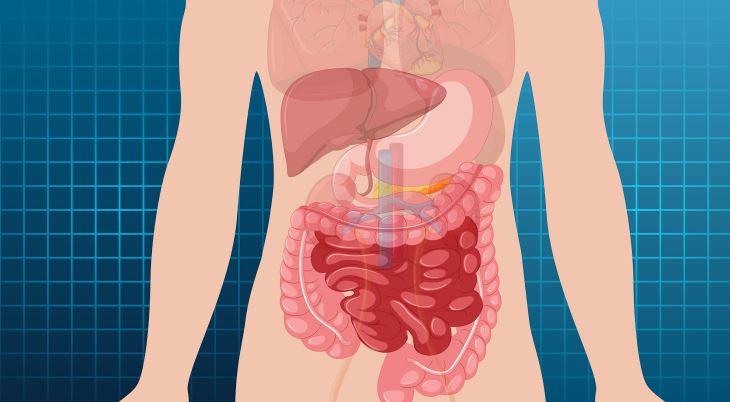
Scientists found a new gut “sixth sense” that detects bacterial flagellin and tells the brain to stop eating.
Introduction
Scientists now know that the gut has its own senses. It can detect nutrients and stretch when full. There are special types of cells in the gut called neuropod cells. They can sense different chemicals in the gut. Then they send that information along nerves that control many processes in our bodies, including digestion. They can tell us if we are hungry or full (see Figure 1). Neuropod cells are basically the gut’s tiny messengers.
This communication process is complex. Neuropod cells first have to detect chemicals from the gut. They do this using specific receptors. Think of a lock and key. If you have the right key you can open a door and talk to the person inside. The message gets passed along. Neuropod cells pass along messages in the form of molecules that can stimulate nerves. They are called neuromodulators.
One thing that is really cool about our guts is that there is a whole community of bacteria living there. They help our guts function and it’s important to keep them healthy. We wondered if there was a way that our gut responds to signals from bacteria in real time. Almost all microorganisms create the protein flagellin to build the tiny tails they use to swim. So, we wanted to know if neuropod cells could sense flagellin. We also wanted to know if flagellin could trigger neuropod cells to send messages to the brain about hunger and eating.
Methods
We studied mice to find out how gut cells sense bacteria. Mice are a good choice for research like this because their bodies work a lot like ours. We tested different groups of mice:
Normal mice
Knockout mice. These mice were missing a specific receptor that usually helps the immune system. Neuropod cells may also use this receptor to sense flagellin.
Germ-free mice. These mice were raised without any bacteria in their guts.
Comparing these groups let us test if neuropod cells use a specific receptor to detect bacteria. We could also test if the neuropod cells communicate information about the bacteria to the brain.
We also compared how much food each group ate and how their gut nerves responded when we gave them flagellin.
Results
So what did we find?
First, in normal mice, we discovered that neuropod cells do carry the specific receptor we targeted. This means they can sense flagellin, the “universal badge” of bacteria. We found most of these neuropod cells in the colon, where lots of bacteria live. When we gave normal mice a small dose of flagellin directly into the colon, they ate less food within 20 minutes. We also saw their vagus nerve — the “phone line” between the gut and the brain — fire more signals.
In knockout mice missing the specific receptor, things looked very different. These mice ate bigger meals, spent more time eating, and gained more weight (Figure 2). When we gave them flagellin, they did not change their eating, and their vagus nerves stayed quiet.
Even the germ-free mice ate less when we gave them flagellin. This showed the signal came from the flagellin and not some other pathway related to bacteria.
Discussion
What does all this mean? We have discovered a new sense in the gut that we call the neurobiotic sense. This sense lets your gut talk directly to your brain when it notices flagellin from bacteria. Here’s the pathway:
You eat a big meal.
Bacteria increase in your gut and release flagellin.
Neuropod cells can sense it using a specific receptor.
The neuropod cell then releases a neuromodulator molecule that triggers the vagus nerve to send a message.
The brain hears “You’re full, stop eating”.
This allows your brain to respond to what’s happening in your gut in real time. Perhaps this helps the body keep balance in the gut. When too many bacteria are active, the gut signals the brain to slow down eating so microbes don’t grow out of control.
Why does this matter? Well, gut bacteria can do more than help with digestion. They can change your appetite directly. This may help explain why changes in gut bacteria connect to obesity. Scientists could use this gut-brain pathway to find new ways to treat eating problems. We studied mice, and we tested only one kind of flagellin. In the future, scientists could check other kinds of bacteria – and see if the same thing happens in humans. But for now, we know this: your gut is not just about food. It also listens to bacteria and sends fast messages to your brain. That’s the power of the neurobiotic sense.
Conclusion
[100 words]
What you eat matters not only for energy, but also for how your gut and brain work together. Eating a variety of healthy foods helps keep your gut bacteria balanced. This also supports better signals to your brain. Pay attention to messages from your body about fullness – they can help keep you healthy! Next time you feel full, remember: your gut and its microbes may have helped send that message.