This collection of adapted research articles highlights how scientists use DNA to understand migration, evolution, health, and more. Engage students in exploring DNA and genetics using the scientific method. Each article comes with standards-matched adaptations, introductory video content, comprehension questions, and vocabulary to further the lesson outcomes. Each adapted article also comes with additional suggestions for activities to enhance the readers’ understanding and make the class more exciting.
1. Why are some sea snails moving north?
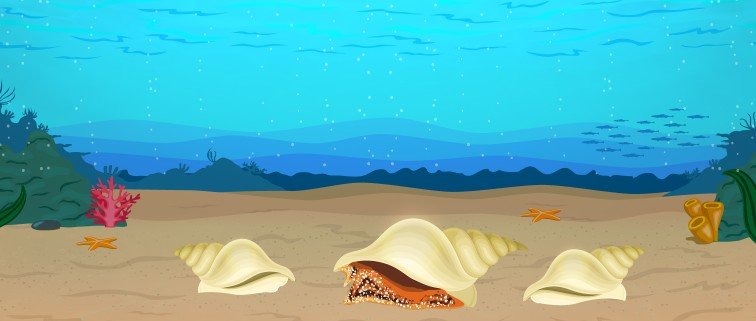
Abstract: If you lived in sunny California, would you want to move north? Well, some sea snails are doing exactly that! We were curious about Kellet’s whelks, a type of sea snail. They usually live in the warm waters of Southern California and Mexico. Now, we’re finding them further north in colder water! We collected Kellet’s whelks from the California coast – some from the south and some from the north. We kept them in separate tanks with identical conditions. Then we compared the DNA of their babies. The northern snails had 2,770 genes that were working differently. These differences were so clear that we could tell if a baby snail’s parents came from the south or north just by looking at its DNA. We also found that the northern snails’ genes show some changes that help them survive in the colder water up north! Our findings are helping scientists understand how ocean animals are adapting to a changing climate.
This article is suitable for middle school and lower high school students. An audio version is available in English. This article includes a video round-up of four hands-on classroom activities plus extra resources to extend the lesson plan about this article.
- Key terms: climate change, climate change adaptation, evolution, genetics, natural selection
- Scientific figures: bar graph, map
- Scientific method: data validation, DNA sequencing, experiment, observation, representative sampling, scientific modeling
2. How did mammals evolve to live in the sea?

Abstract: Marine mammals are well adapted to living in the sea. For example, whales and dolphins are excellent divers, hold their breath for long periods, and can sleep underwater. However, this was not always the case. In fact, whales and dolphins (collectively known as cetaceans) evolved from mammals that once lived on land! How did cetaceans develop these abilities to live underwater? A group of chemicals called neuropeptides may hold the answer. These chemicals play important roles in numerous bodily processes including sleep, feeding and the maintenance of blood pressure. We compared the neuropeptides found in cetaceans with those found in land mammals. We wanted to see how they are different. We found that marine mammals have lost the ability to make many of the neuropeptides that land mammals still have. So, differences in neuropeptides may explain how cetaceans adapted to live in a marine environment.
This article is suitable for middle school and lower high school students. An audio version is available in English, and a written translation is available in Spanish.
- Key terms: animal behavior, evolution, genetics, mammals, natural selection, neuroscience, veterinary medicine, whales
- Scientific figures: pictograph
- Scientific method: DNA sequencing, scientific modeling
3. What happens to astronauts’ DNA in space?

Abstract: Space is a really cool place. It is even becoming popular as a tourist destination! But space is also a dangerous place. Floating around sounds fun, right? But weightlessness can have negative impacts on human health. Think muscle and bone loss or vision problems. And exposure to cosmic radiation can actually damage our DNA. So, it is important to better understand how the human body responds to being in space. We studied DNA from the 2021 SpaceX Inspiration4 mission crew. We looked at it before, during, and after their 3-day trip to space. We were particularly interested in telomeres – the “end-parts” of chromosomes that protect the DNA. Telomere length relates to aging and the risk of other diseases. We found that telomeres got longer while the crew was in space. When the astronauts returned to Earth, telomeres quickly shortened. Exposure to cosmic radiation might have triggered this dynamic response. Keeping people safe from cosmic radiation is essential for any long-duration spaceflight. In the future we can use this information to help keep people healthy as we explore the cosmos.
This article is suitable for middle school and lower high school students. An audio version is available in English. This article includes a Lesson Idea video to engage students in modeling DNA with gumdrops.
- Key terms: genetics, molecular biology, space travel
- Scientific figures: bar graph, pictograph
- Scientific method: DNA sequencing, observation, PCR (polymerase chain reaction)
4. How can we detect rare animals?

Abstract: Did you know that scientists can use DNA to figure out which organisms have been in an area? Organisms leave DNA behind in the environment. We call this DNA environmental DNA (eDNA). Using eDNA is a new technique that scientists have used in water environments. We wanted to figure out if this same technique could work to find species on land. We collected soil samples containing eDNA from golden moles in the western part of southern Africa. These mammals are hard to observe because they live underground and some species are rare. People believed that one species, De Winton’s golden mole, might be extinct. We extracted eDNA from soil samples. Then we compared the eDNA to DNA samples we collected from golden moles and from databases. We found that all four golden mole species live in this region of Africa. That means that we can use eDNA to find rare animals in land environments. It also means that De Winton’s golden mole is not extinct!
This article is suitable for middle school and lower high school students. An audio version is available in English. This article includes an SJK Academy Research Recap video summarizing the content, and an SJK Interactive module guiding students through the content. This article also includes a Lesson Idea video to engage students in building and extracting DNA.
- Key terms: extinction, genetics, mammals, molecular biology
- Scientific figures: pictograph
- Scientific method: DNA sequencing
5. How much do viruses change over time?

Abstract: Bacteriophages, or just phages, are tiny viruses that infect bacteria. Some phages help us by killing harmful bacteria and keeping our gut healthy. Although phages have existed for millions of years, we don’t know much about the ones from ancient times. To find out, we analyzed super old human poop samples. Using a new technique called de novo assembly, we pieced together the DNA of ancient viruses from these samples. We discovered nearly 300 types of bacteriophages that we had never seen before. But there was also one 1,300-year-old phage that was almost exactly the same as a modern day species. This was extremely surprising! Our research provides a useful method to rebuild ancient phage DNA sequences and learn more about the history of viruses.
This article is suitable for middle school and lower high school students. An audio version is available in English.
- Key terms: evolution, genetics, microbiology, microbiome, paleogenetics, poop
- Scientific figures: map
- Scientific method: data reconstruction, experiment
6. How safe is vaping?

Abstract: Did you know that most people who vape are teens? E-cigarette (e-cig) companies market vaping as a safe alternative to traditional smoking. Well, vaping is safer than traditional smoking, but it is still dangerous to human health. We wanted to summarize the effects that vaping has on the body’s cells. We reviewed scientific studies about vaping and the human body. We found that vaping causes inflammation of the mouth and lungs. It also damages DNA. Long-term inflammation and high levels of DNA damage can cause cancer. Some e-cig users have reported mouth cancer, but not many yet. That is because cancer formation takes a long time. We will need more studies to know the long-term effects of vaping. But current studies show that using e-cigarettes is not safe.
This article is suitable for middle school and lower high school students. An audio version is available in English, and a written translation is available in Spanish. This article includes an SJK Academy Research Recap video summarizing the content.
- Key terms: cancer, genetics, health
- Scientific figures: pictograph
- Scientific method: scientific review
That’s Not All!
Browse our complete collection of adapted research articles on Genetics, or our curated collection on Gene Editing.


Don’t forget to explore our hands-on lesson plan about Modeling DNA in Space, as well as our collection of free, vetted teaching activities about Genetics and Gene Editing.
Title image by Tara Winstead
Last updated: Nov 2025. If you come across any issues with this collection, please let us know by emailing editor @ sciencejournalforkids.org.