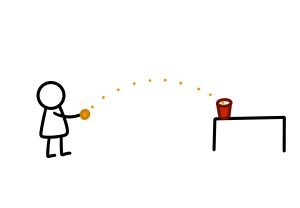
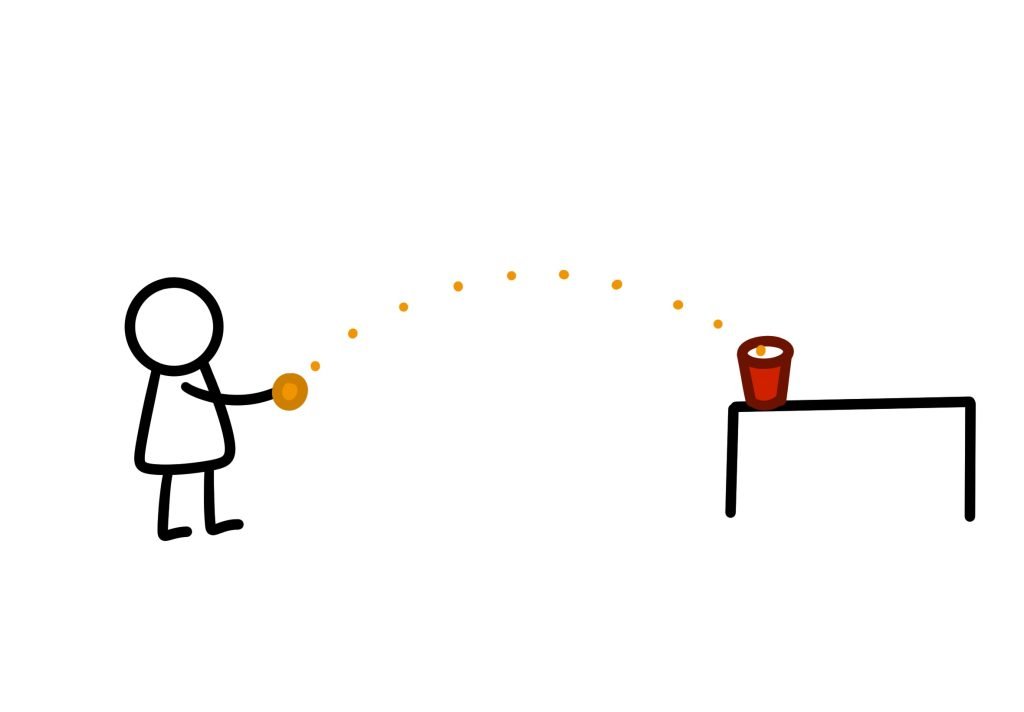
This hands-on, interactive classroom activity helps students learn about chemical reactions through a game of cup pong. The game serves as a metaphor for chemical reactions: the cup is Reactant A, the ball is Reactant B, and when the ball lands in the cup Product AB is formed. Once the game is set up, ask questions and conduct experiments as students play.
This game was designed and illustrated by Esther Che, a student from Arnold O. Beckman High School in Tustin, California.
Preparation
You will need as many of each as there are students in the class:
- Ping pong balls
- Paper or plastic cups
Place a paper cup on one table, and a ping pong ball on another table. Position the students between the two tables. The students’ goal is to throw the ping pong ball into the cup using the different scenarios (experimentation rounds) below.
Experimentation: Round 1 (Base Game)
The entire class competes as individuals. Students have to throw the ball from their position near the ball table to the cup on the other table. Whoever scores first wins.
Experimentation: Round 2 (Speed Up the Reaction)
Split the students into the following groups:
- Have a volunteer who plays solo (control group, no change in anything = default scenario)
- Have a partnered group, where one partner provides the next ball quickly and constantly, we say this group is very “heated” (temperature scenario)
- Have a partnered group, where one partner moves the ball closer (catalyst scenario)
- Have a group of the many students and many cups (increased concentration scenario)
- Each students should have one cup and ball to play by themselves
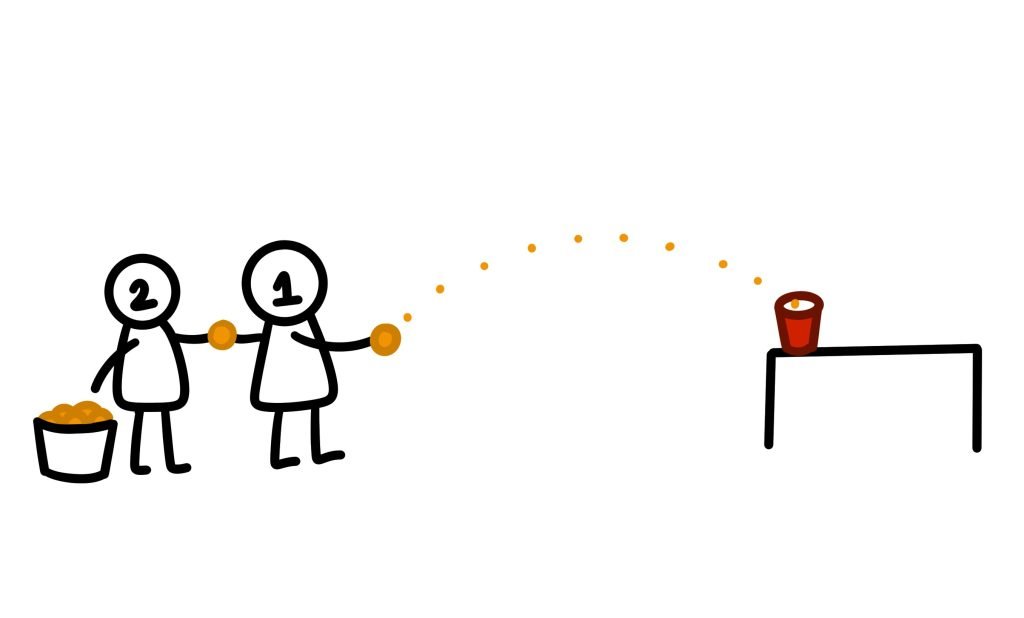
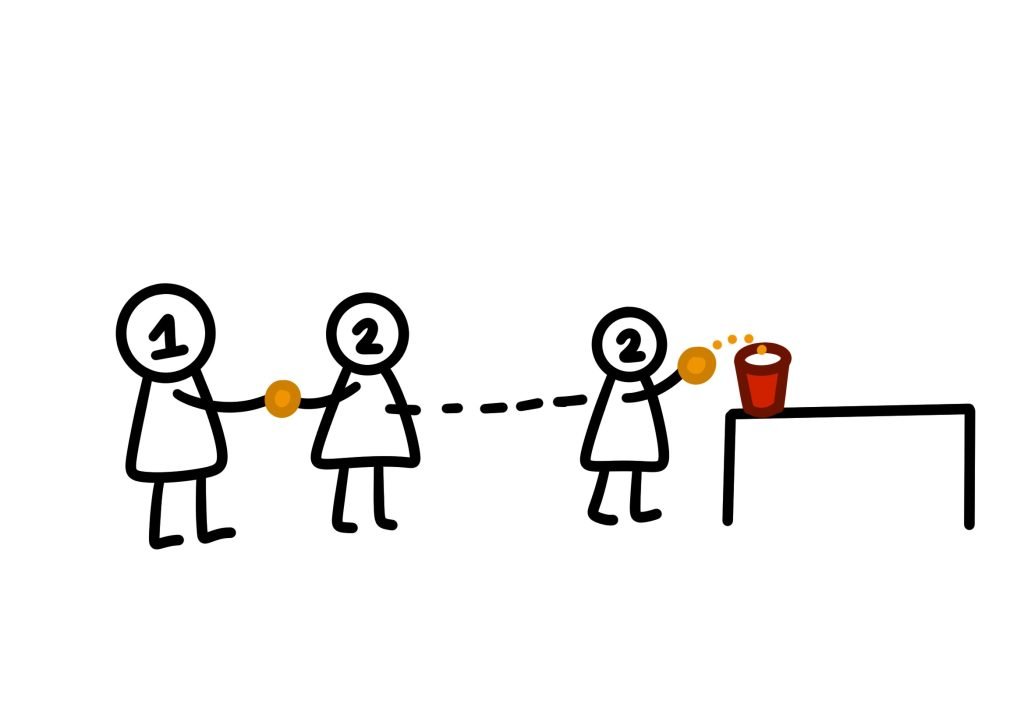
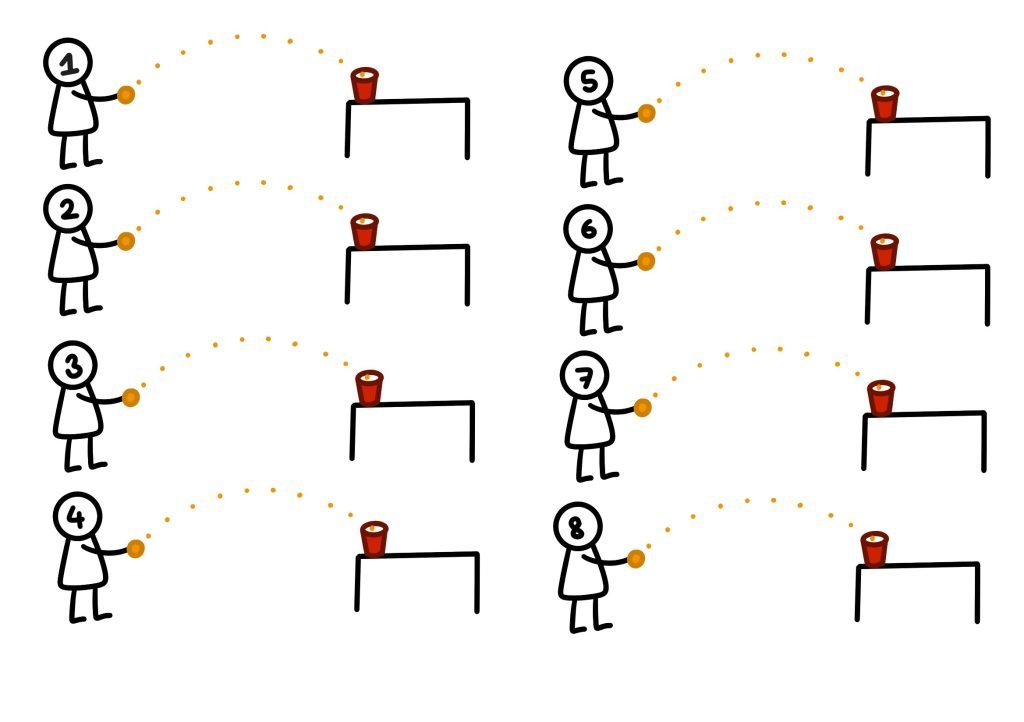
Have the four groups compete to see who can get the ball into the cup first, using a timer if desired. For the group with many students, AB is gained when the first ball gets into the cup (meaning we only need one student to get the ball in to win)! Record how long it takes for each group to get the ball in the cup, or (without a timer) the in which order each group is successful. Repeat the experiment many times.
Extensions
Try new experiments with the game to explore additional chemistry concepts, such as conservation of matter and conservation of mass. Students can get inspiration for new experiments by browsing SJK’s collection of adapted scientific articles on Chemistry.
That’s Not All!
Check out all of our hands-on activities, or browse collections of vetted externally-produced lesson plans.
Visit this page for more information about using our adaptations and accompanying resources as teaching tools. We’d love to hear from you! Connect with us through any of the channels at the bottom of this page to share your own experience with using Science Journal for Kids in the classroom.
Title image by Esther Che.
Collection image by Chokniti Khongchum
Last updated: Sept 2024. If you come across any issues with this collection, please let us know by emailing editor @ sciencejournalforkids.org.