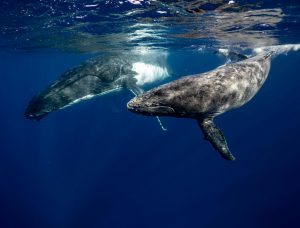
Engage students in exploring whales and dolphins using the scientific method. Each article in this collection comes with standards-matched adaptations, introductory video content, comprehension questions, and vocabulary to further the lesson outcomes. Each adapted article also comes with additional suggestions for activities to enhance the readers’ understanding and make the class more exciting.
1. How do dolphin mothers speak with their babies?

Abstract: Have you ever noticed that people speak differently to babies and toddlers? Caregivers, particularly mothers, change their speech when talking to young children. How? Their speech includes higher pitches. They also use a wider pitch range and shorter sentences. Scientists call these changes in speech patterns child-directed communication, but you can think of it as baby talk. We wanted to find out if bottlenose dolphins also use child-directed communication. We analyzed the sounds made by female dolphins and found that they used higher frequency whistles when they were with their calves. We also found that the frequency range of their whistles increased. Like humans, bottlenose dolphins speak differently to youngsters than to adults.
This article is suitable for middle school students. An audio version is available in English and Spanish, and a written translation is available in Spanish.
- Key terms: animal behavior, dolphins, echolocation, mammals, mother, physics, wildlife
- Scientific figures: line graph
- Scientific method: field study, observation
2. How did mammals evolve to live in the sea?

Abstract: Marine mammals are well adapted to living in the sea. For example, whales and dolphins are excellent divers, hold their breath for long periods, and can sleep underwater. However, this was not always the case. In fact, whales and dolphins (collectively known as cetaceans) evolved from mammals that once lived on land! How did cetaceans develop these abilities to live underwater? A group of chemicals called neuropeptides may hold the answer. These chemicals play important roles in numerous bodily processes including sleep, feeding and the maintenance of blood pressure. We compared the neuropeptides found in cetaceans with those found in land mammals. We wanted to see how they are different. We found that marine mammals have lost the ability to make many of the neuropeptides that land mammals still have. So, differences in neuropeptides may explain how cetaceans adapted to live in a marine environment.
This article is suitable for middle school and lower high school students. An audio version is available in English, and a written translation is available in Spanish.
- Key terms: animal behavior, evolution, genetics, mammals, natural selection, neuroscience, veterinary medicine, whales
- Scientific figures: pictograph
- Scientific method: DNA sequencing, scientific modeling
3. Why don’t whales get cancer?
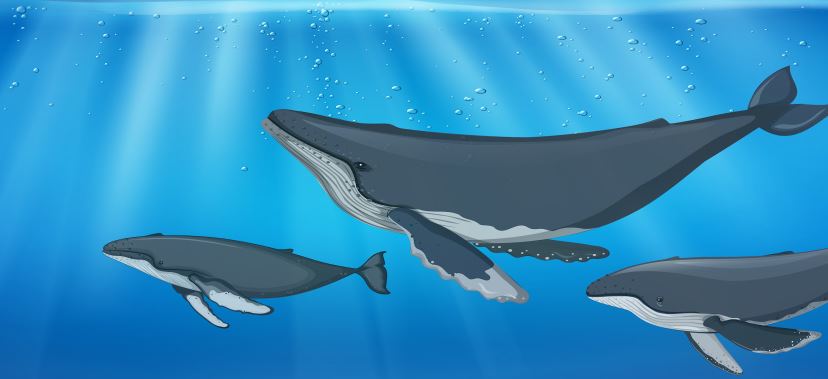
Abstract: Every day, the cells in your body are super busy growing and dividing. When something goes wrong, mutations appear. Our immune system usually detects cells with mistakes and kills them before they become a problem. But sometimes they go undetected and the rogue cell multiplies, turning into cancer. So, if an animal has more cells and a longer life, it should get more cancer. Whales have up to 1,000 times more cells than humans and some live for over 200 years. But their cancer rates are no higher than ours! To figure out why this is, we compared the humpback whale and other whale genomes to other mammal genomes. Our DNA analysis showed that in whales there was duplication of cancer-suppressing genes. We also found that whales have the slowest rate of genetic changes. Our findings help us understand the role of DNA in preventing cancer. It could also help us fight cancer in humans!
This article is suitable for middle school and lower high school students. An audio version is available in English, and a written translation is available in Vietnamese. This article includes two Lesson Idea videos to engage students in exploring cell division and DNA modeling.
- Key terms: cancer, genetics, mammals, veterinary medicine, whales
- Scientific figures: bar graph
- Scientific method: DNA sequencing, experiment
4. Why are whales in trouble – again?

Abstract: Imagine you are standing on a boat. You look out, searching in all directions for a glimpse of a whale. But you can’t find any. Your excitement fades. Where are the whales? Many years ago, an ocean without whales was a real concern because we hunted them too much. Then we banned whaling and their populations grew. Yet some whale species are declining again. Why? To find out, we analyzed data from the feeding grounds of the North Atlantic Right whale. We found that warmer ocean temperatures made food harder to find. Without enough food, fewer whales were born. Also, whales started swimming north to find more food. This puts them in danger from getting hit by ships and tangled in fishing nets. So now they face a new threat from humans: climate change.
This article is suitable for middle school and lower high school students. An audio version is available in English, and a written translation is available in Bulgarian. This article includes a Lesson Idea video to engage students in exploring the greenhouse effect. This article also comes with two Ask-A-Scientist videos interviewing the original researcher Dr. Erin Meyer-Gutbrod about how we can help whales and what whales eat.
- Key terms: climate change, extinction, mammals, whales
- Scientific figures: bar graph, map
- Scientific method: case study, data extrapolation, field study
5. How can we track life in the ocean?

Abstract: Have you ever tried to count all the different species in a pond? It’s very hard, especially when you try to find all the tiny animals hiding among the weeds. Now, imagine if you wanted to count all the species in the sea! Scientists struggle to monitor life in the ocean because it is so vast and deep. Yet, we need to know exactly what’s down there in order to protect it. We wanted to use the bits of DNA that organisms leave behind in their environment to work out which species were present. This is called environmental DNA (eDNA). We looked at interactions between different life forms in Monterey Bay, California. We also looked at how they responded to seasonal and environmental change. We found that different species were present throughout the year. Warmer waters changed what was there. We also found that certain species (such as humpback whales) can be especially useful for telling us about the environment. Environmental DNA proved to be an exciting new method for tracking and protecting life in the ocean!
This article is suitable for middle school and lower high school students. An audio version is available in English, and a written translation is available in Bulgarian. This article includes a Lesson Idea video to engage students in DNA modeling.
- Key terms: climate change, genetics, molecular biology, overfishing, whales
- Scientific figures: pictograph, time series graph
- Scientific method: case study, DNA sequencing, field study, PCR (polymerase chain reaction), representative sampling
That’s Not All!
Browse our complete collection of adapted research articles about Whales and Dolphins.
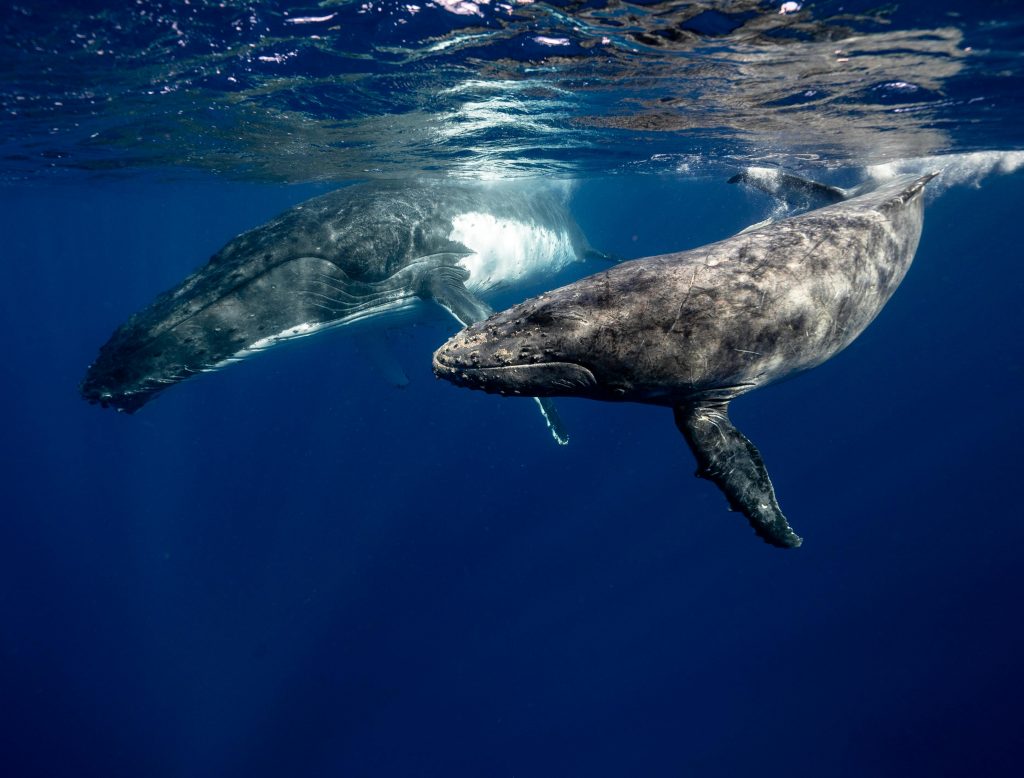
Title image and whales collection photo by Elianne Dipp
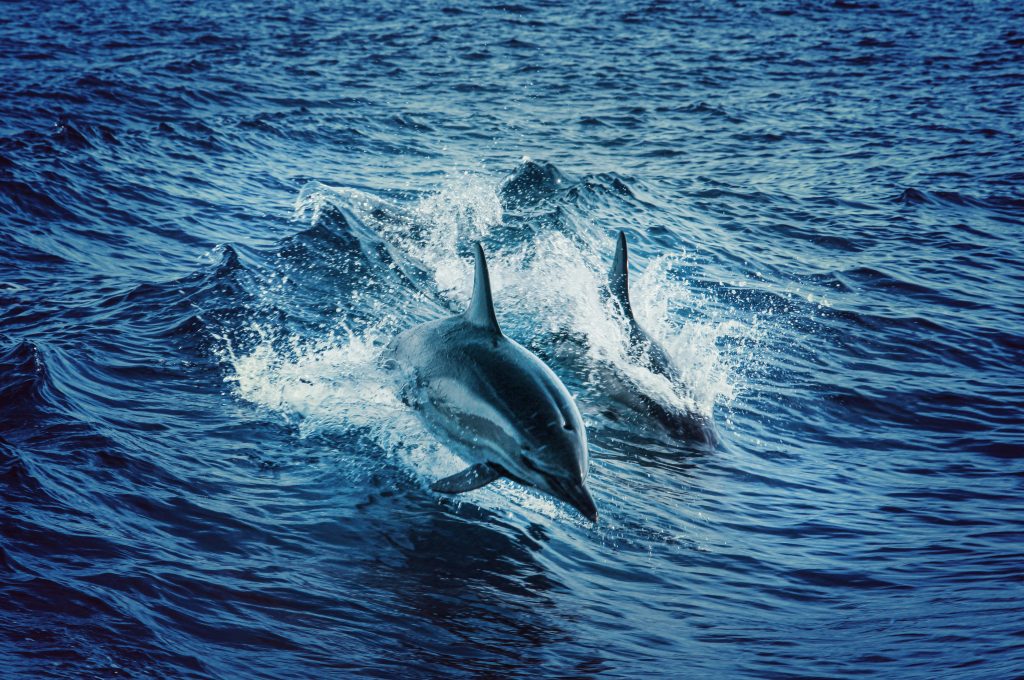
Dolphins collection photo by Tom Swinnen