
This collection of adapted research articles introduces students to the concept of sustainable aviation: making flight more environmentally friendly by finding fuel alternatives. Engage students with standards-matched adaptations, introductory video content, comprehension questions, and vocabulary to further your lesson outcomes. Each adapted article also comes with additional suggestions for activities to enhance the readers’ understanding and make the class more exciting.
1. What sustainable options are there for jet fuel?
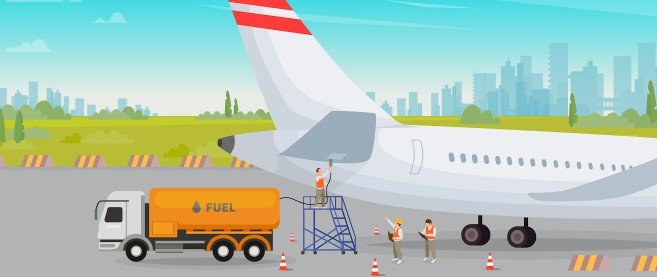
Abstract: If you could travel anywhere in the world, where would it be? Is it a tropical paradise or the snow-capped mountains? Wherever it is, you might need to take an airplane to get there. Airplanes use kerosene jet fuel to take you to your travel destination. Kerosene jet fuel comes from fossil fuels. When burned, fossil fuels produce carbon dioxide. Carbon dioxide is a greenhouse gas that contributes to global warming. To reduce global warming, carbon emissions from airplanes must decrease. That means airplanes will need new fuel sources. We wanted to identify possible sustainable aviation fuels. We also wanted to know if they are already in use or if they are in the research and development stage. So, we did a research review of alternative jet fuels. We found that there are three main alternative fuel types. These include biofuels, hydrogen (and hydrogen-derived) fuels, and electricity. One of the biofuels is already used in airplanes. The other alternatives are still in the research and development phase.
This article is suitable for middle school and lower high school students. An audio version is available in English.
- Key terms: carbon footprint, climate change, fuel, renewable energy, sustainability
- Scientific figures: pictograph
- Scientific method: systematic review
2. How can we make plant-based jet fuels sustainable?

Abstract: Plant-based jet fuel is the focus of many studies. Why? Many people think that these fuels are a good alternative to fossil fuel jet fuels. They think they are a sustainable option for air travel. To be sustainable, plant-based jet fuels need to meet society’s needs. These needs are economic, environmental, and social. Almost all the studies about plant-based jet fuel focus on environmental impacts. They also discuss the economics of plant-based jet fuel. We wanted to figure out how switching to plant-based jet fuels can meet important social needs. So, we identified the important social indicators to consider. Based on several scientific studies, we found that plant-based jet fuels can serve as a sustainable alternative for air transportation. People need to design this new industry to address each social indicator, not only environmental and economic ones. They must also find ways to balance competing needs, known as trade-offs. We recommend research to figure out how to manage the different trade-offs effectively.
This article is suitable for middle school and lower high school students. An audio version is available in English.
- Key terms: aviation, biotechnology, economics, fuel, renewable energy, sustainability
- Scientific figures: pictograph, Venn diagram
- Scientific method: systematic review
3. How can air travel produce fewer greenhouse gas emissions?

Abstract: When you think about the causes of climate change, what comes to mind? Do you think of gasoline-powered cars? Or do you think about coal and natural gas power plants? It turns out that a big source of greenhouse gas emissions is flying. To prevent Earth from becoming too warm, many countries have set net-zero emission goals. So, the aviation industry needs to make changes. We analyzed the amount of greenhouse gas emissions produced in nine different scenarios in the years up to 2050. Each scenario included a change in the demand for flying, a change in the efficiency of the airplanes, and a change in the type of fuel used. We found making changes to these factors can reduce greenhouse gas emissions. However, the aviation industry will also need to invest in carbon dioxide removal from the atmosphere. With these changes, it is possible for the aviation industry to reach net-zero emissions by 2050!
This article is suitable for middle school and lower high school students. An audio version is available in English. This article includes an SJK Academy Research Recap video to help students summarize the content of the article.
- Key terms: aviation, climate change, fuel, greenhouse gas emissions
- Scientific figures: bar graph, pictograph
- Scientific method: scientific modeling
That’s Not All!
Science Journal for Kids is grateful to the JetBlue Foundation whose support in 2023 allowed us to adapt these articles for your students.

Browse our complete collections of adapted research articles on Aviation and Fuel.
Title image by Sam Willis
Last updated: April 2025. If you come across any issues with this collection, please let us know by emailing editor @ sciencejournalforkids.org.