I know I speak for a lot of people when I say that 2025 was a hard year. The world is changing, and (just as the Red Queen explained to Alice in Through the Looking Glass), we have to run as fast as we can just to keep up.
It has been difficult for us as an organization, too. We had our 10th anniversary in 2025. For the past decade, we have been providing all our content for FREE to our audience. We fund our work mostly through grants. But there’s much more competition for grants since government funding has become so uncertain. In 2025, 10 of the 12 grants we applied for were rejected or reduced. We ran a readers’ fundraising campaign to help ends meet.
Yet in hardship, creativity thrives too! In 2025, we came up with an entirely new interactive format for our science teaching content. It was received with enthusiasm by our audience.
And we still published 32 excellent scientific articles, 60 new videos, and served over 10 million students in the U.S. and around the world.
We created and published 3 interactive lessons based on SJK articles. This new format contains:
figures to click, sliders for zoom, and crosswords to solve
brief videos
outlines with key points
short checkpoint quizzes and a longer final assessment
funny cartoons as rewards
Each is a self-paced, 30-min lesson that can be completed on any device. All the research is still there, just in a new format that’s even easier to digest. An ideal nugget of scientific knowledge for students in middle and high school and a great base for a follow-up discussion in class.
Reach
Launched on 1 September 2025, SJK interactive has had 3,000 online users in its first quarter.
Try for yourself:
Videos
We created and published 60 new videos on our YouTube channel. They are organized in 3 playlists:
Middle school (48%) or high school (50%) teachers.
Subjects: general science, biology, chemistry, physics, English as a second language, general social science, psychology, and history.
Each teacher who uses our resources shares them with an average of 45 students.
60% teach at economically disadvantaged areas (schools with Title 1 or Free and Reduced Meals Program).
80% of their classes include students with English as a second language.
75% of classes include special education and neurodiverse students.
Geographic distribution of readers:
64% of our readers are in the USA.
18% are in the UK, Canada, Australia, and New Zealand.
18% are from 150+ other countries around the world.
Feedback from Educators
Thank you so much for the incredible work you do at Science Journal for Kids. Your articles have been an invaluable resource in my classroom, helping my students build essential research skills in a way that is both accessible and engaging. I’m truly grateful for your commitment to making real science understandable for youth.
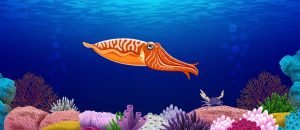
This lesson on eDNA is AMAZING! Your article and interactive lesson plan not only make this complex topic easier to comprehend, with the cutest little animals and brilliant scientists, but it makes the learning so enjoyable for any student. Are there plans to make more of this type of lesson?
OurTeam
Science Journal for Kids is produced by a close-knit team of:
5 editors
4 writers
2 designers
4 outreach & marketing managers and volunteers
The current core team has been stable for over 4 years, which shows each team member’s motivation and dedication to the organization’s educational mission.
OurPartners
Collaborations
We develop partnerships with organizations that share our mission:
Harvard University’s LabXchange – a free online science teaching platform that has republished 370+ pieces of content from SJK.
Skype-a-Scientist – a grassroots science communication platform that connects researchers with classrooms. We adapted this article prior to the scientist’s session, who shared it directly with the 84 classrooms joining the call.
See for yourself:
Supporters
In 2025, Science Journal for Kids received financial support from:
Goggio Family Foundation
GM Foundation
Moderna Foundation
Change Happens Foundation
34 individual donors
Thanks to these generous supporters, all of SJK‘s science teaching content is available for free.On behalf of all our readers, thank you for your trust!